The Epoxy-Polyurethane Partnership
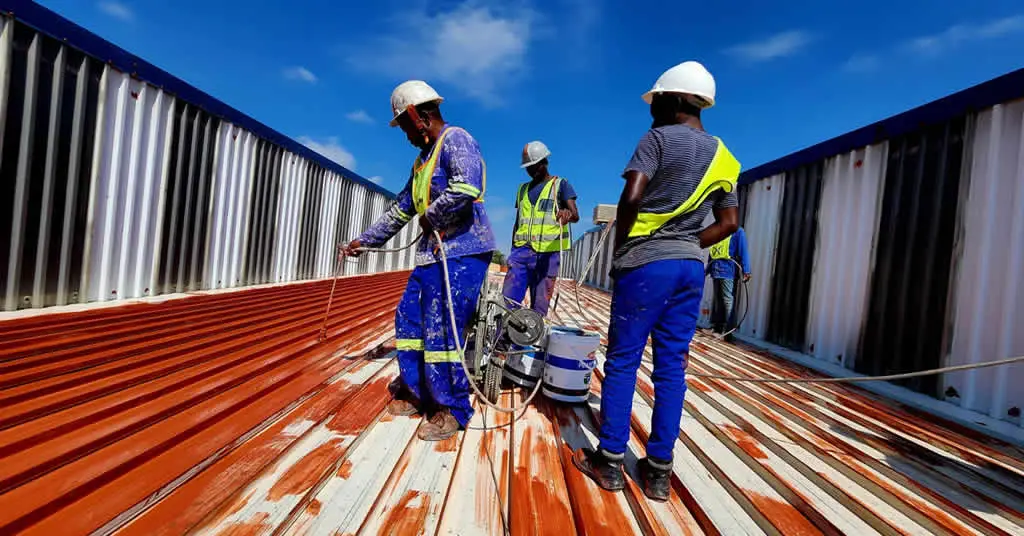
In industrial coating system design, the combination of an epoxy primer and a polyurethane topcoat is arguably the most widely specified protective paint system in the world. Understanding why these two chemistries are paired , rather than using epoxy throughout, or polyurethane throughout , reveals important principles about how modern corrosion protection systems are engineered for performance, longevity, and cost-effectiveness.
What Epoxy Primers Do Best
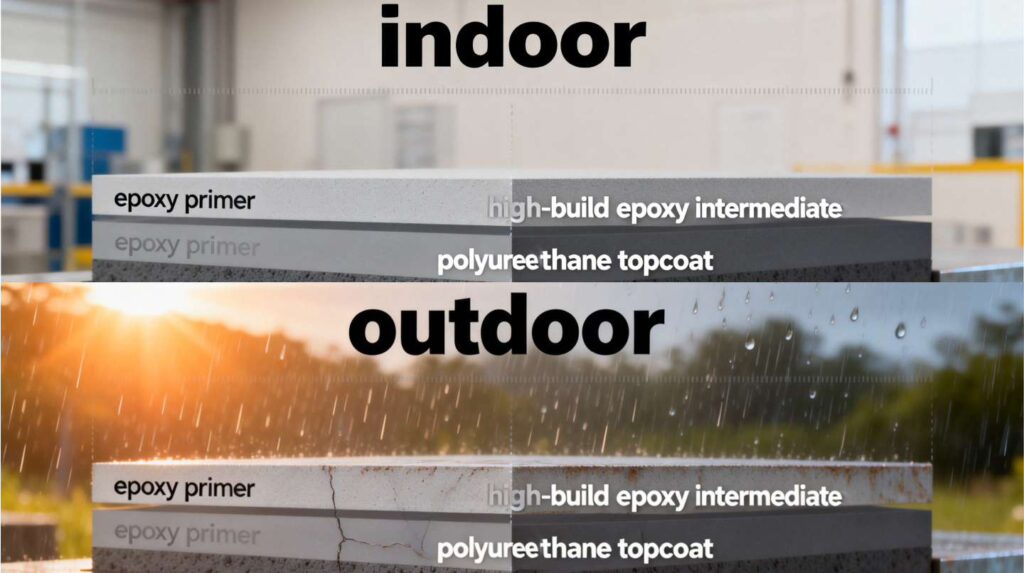
Epoxy primers are exceptional at adhesion to steel and concrete substrates, barrier resistance to moisture and chemical penetration, and flexibility in formulation for a wide range of service environments. Whether it is a zinc-rich epoxy primer providing cathodic protection, a high-build epoxy intermediate providing barrier build, or a surface-tolerant epoxy bonding to marginally prepared steel, the epoxy primer family forms the structural foundation of virtually every industrial coating system.
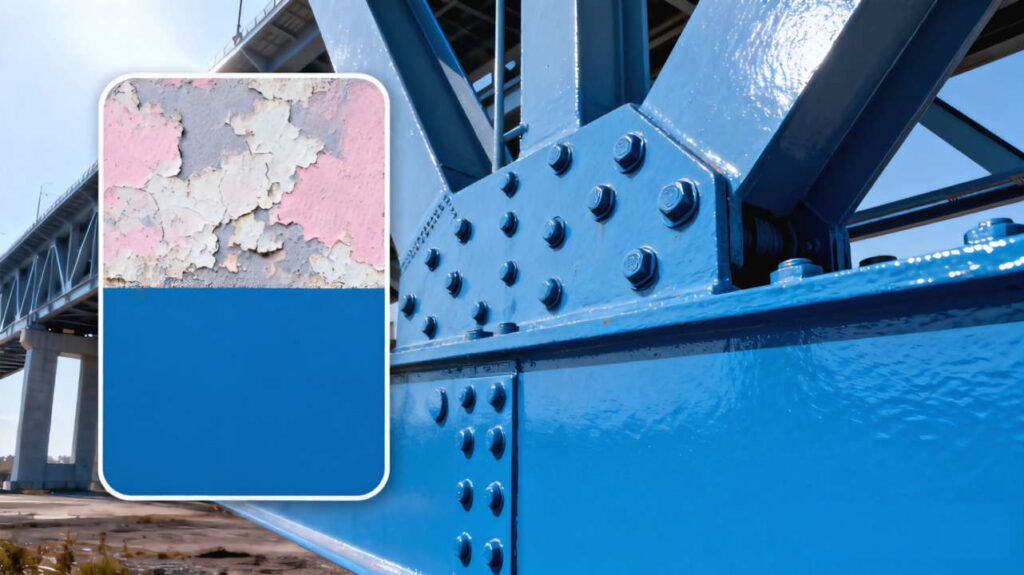
The limitation of epoxy coatings is UV stability. Aromatic epoxies , which are the vast majority of industrial epoxy formulations , chalk rapidly under UV exposure. The aromatic ring structures in the epoxy binder absorb UV radiation and degrade, causing the surface to become chalky, lose gloss, and eventually erode. This is not a corrosion protection failure , the underlying barrier function remains , but it is aesthetically unacceptable for topcoat use in atmospheric service.
What Polyurethane Topcoats Add to the System
UV Stability and Gloss Retention
The defining advantage of an aliphatic polyurethane topcoat , the variant used in atmospheric protective paint systems , is its resistance to UV degradation. Aliphatic isocyanates do not contain the aromatic ring structures that make epoxies susceptible to UV breakdown. A well-formulated industrial polyurethane coating will retain gloss, colour, and surface integrity for 10 to 15 years or more in normal atmospheric service, compared to the rapid chalking of an exposed epoxy topcoat within months.
Chemical and Stain Resistance
Polyurethane coatings provide excellent resistance to a wide range of chemicals encountered in industrial environments , oils, fuels, mild acids and alkalis, cleaning agents, and process splashes. This makes the PU finish paint the preferred topcoat for visible structures in chemical plants, refineries, and process facilities where both aesthetic maintenance and chemical resistance are required.
Mechanical Durability
A cured polyurethane coating is hard, tough, and abrasion-resistant , properties that make it suitable for structures subject to physical contact, wind-blown abrasive particles, or operational impacts. The flexibility of polyurethane relative to epoxy also improves resistance to cracking under thermal cycling , important for structures that experience significant temperature variation between Indian summer and winter extremes.
Why Not Use Polyurethane Throughout?
A logical question is why the polyurethane coating is not used as both primer and topcoat, eliminating the need for an epoxy primer. The answer is economics and adhesion. Polyurethane topcoats are significantly more expensive per litre than epoxy primers. And while polyurethanes adhere adequately to prepared steel, they do not offer the same level of zinc-reinforced cathodic protection or the MIO-pigmented barrier performance that epoxy primers and intermediates bring to the system.
The epoxy-polyurethane protective paint system is a division of labour: epoxy does what it does best , adhesion, barrier, cathodic protection; polyurethane does what it does best , UV stability, gloss retention, and surface protection. Together, they form a system superior to either chemistry used alone.
Typical System Configurations
- C3 Atmospheric (moderate industrial inland): zinc-rich epoxy primer + polyurethane topcoat (two-coat system for lower corrosivity applications)
- C4 Atmospheric (industrial, chemical plant, coastal): zinc-rich epoxy primer + epoxy MIO intermediate + polyurethane topcoat (three-coat standard)
- C5 Atmospheric (severe marine or industrial): zinc-rich epoxy primer + two coats of high-build epoxy intermediate + aliphatic polyurethane topcoat (high-build system)
- High-UV environments: aliphatic polyurethane topcoat is essential , aromatic polyurethane will chalk under Indian solar radiation intensity.
Complete System Supply from Ashok Paint Agencies
Ashok Paint Agencies supplies matched epoxy primer and polyurethane topcoat systems from Berger Protecton, Asian Paints PPG, Hempel, and AkzoNobel , ensuring complete system compatibility and manufacturer-backed performance warranties for your protective paint system. Contact our technical team at ashokpaintagencies.com for a project-specific system recommendation.