Why Warehouse Floors Demand Specialist Coatings
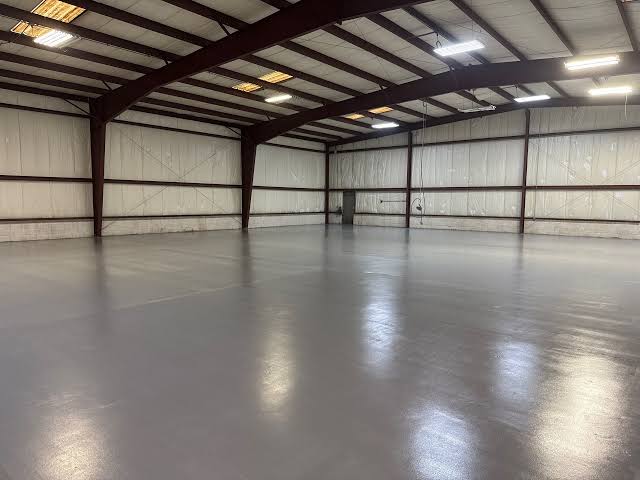
The floor of a busy warehouse is one of the most mechanically stressed surfaces in any industrial facility. Counterbalance forklifts weighing several tonnes traverse the same floor lanes dozens of times daily. Heavy pallets are set down with impact loads that exceed the static weight several times over. Racking feet concentrate enormous point loads on small contact areas. Without a properly specified warehouse floor coating, concrete floors deteriorate rapidly , generating dust, creating uneven surfaces, and progressively losing the structural integrity that safe pallet storage and handling depends on.
The Safety Case for Warehouse Flooring
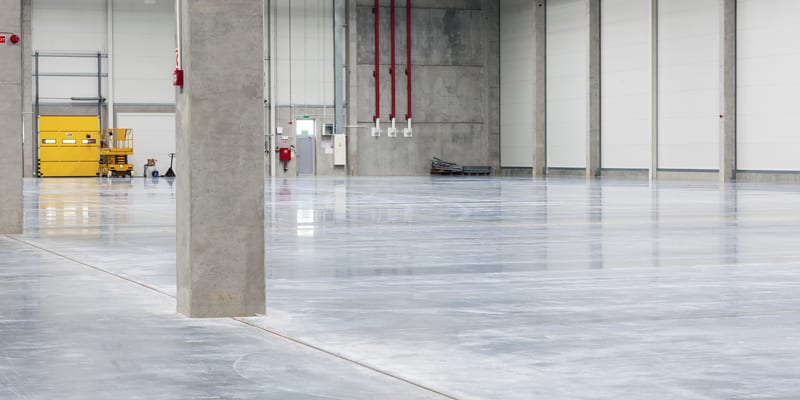
Beyond durability, warehouse flooring has critical safety implications. Poorly maintained concrete floors create trip hazards from spalling and cracking. Dusty concrete reduces forklift tyre grip. Inadequately marked floor coating system layouts remove the visual management of pedestrian and forklift zones that underpins safe warehouse operation. A well-specified epoxy floor coating system addresses all of these issues simultaneously , delivering durability, anti-slip performance, and a surface that supports effective floor marking and zone management.
Types of Warehouse Floor Coating Systems
Thin-Film Epoxy Floor Coating (100–300 microns)
Thin-film systems seal the concrete surface against dust, provide a cleanable finish, and allow floor marking systems to be applied. They are appropriate for lighter-duty warehouse flooring applications , storage areas with pedestrian traffic and light pallet jack movement , but are not robust enough for areas of regular heavy forklift traffic. They are cost-effective for large areas where heavy mechanical stress is absent.
Self-Levelling Epoxy Systems (2–3mm)
The workhorse industrial floor coating system for busy warehouses. Self-levelling epoxy creates a seamless, smooth, hard surface at 2 to 3mm thickness that handles regular forklift traffic, point loads from racking systems, and the impact of heavy goods. Applied over a properly prepared concrete substrate, a self-levelling system can achieve a surface hardness and impact resistance that far exceeds the concrete beneath it, effectively protecting and strengthening the floor.
Epoxy Mortar Systems (4–6mm)
For the most demanding areas , loading docks, freezer room thresholds, heavy-goods marshalling areas , epoxy mortar floor coating system products incorporate high aggregate loadings to create a polymer-concrete surface with exceptional compressive strength, impact resistance, and abrasion resistance. These are the appropriate specification where loaded heavy goods vehicles drive directly onto the floor or where impact loading from dropped loads is a routine occurrence.
Polyurethane Topcoats for Warehouses
In warehouses with significant natural light exposure, a UV-stable polyurethane topcoat over the epoxy base system prevents yellowing and gloss loss over time. Polyurethane topcoats also add a degree of flexibility that improves crack resistance in concrete slabs subject to minor thermal movement.
Anti-Slip Performance: Critical for Safety
Bare epoxy floor coating systems cure to a smooth, potentially slippery surface , particularly when wet. Warehouse flooring specifications must address anti-slip performance through one of several approaches:
- Broadcast aggregate finish: quartz or aluminium oxide aggregate is broadcast into the wet self-levelling layer before it cures, creating a textured surface with defined slip resistance
- Anti-slip topcoat: specialist polyurethane topcoats incorporating fine aggregate particles provide a consistent anti-slip texture with good durability
- Roller-applied anti-slip paints: for existing factory floor coating areas being refurbished, anti-slip paint systems can be applied over existing coatings to restore safety without full recoating
Floor Marking: Integrating Safety Signage
A complete warehouse floor coating specification should incorporate a floor marking strategy. Epoxy-based floor marking paints provide durable demarcation of pedestrian walkways, forklift lanes, emergency exits, hazard zones, and storage bay boundaries. Floor marks applied as part of the coating system , rather than tape or surface paint , are resistant to forklift tyre wear and cleaning and maintain their visibility for years.
Key Factors in System Selection
- Traffic type and frequency: the specification must match the heaviest and most frequent traffic the floor will experience
- Chemical exposure: oil, cleaning agents, battery acid, and food products all influence the required chemical resistance of the factory floor coating
- Substrate condition: damaged, cracked, or contaminated concrete requires repair and specialist primers before any floor coating system is applied
- Operational access: warehouse floor coating application requires the floor to be clear and out of service during application and cure , typically 24 to 48 hours for self-levelling systems
Upgrade Your Warehouse Floor with Ashok Paint Agencies
Ashok Paint Agencies supplies the complete range of warehouse floor coating and industrial floor coating systems , from thin-film sealers to heavy-duty self-levelling and mortar systems , with full technical support and application guidance. Speak to our team at ashokpaintagencies.com to design the right floor coating system for your facility.