Why Reactive Maintenance Is Always More Expensive
Most industrial plants operate their coating maintenance on a reactive basis waiting until visible corrosion, paint peeling, or a scheduled shutdown to address coating degradation. This approach consistently delivers worse outcomes, both technically and financially, than a proactive industrial coating maintenance schedule. By the time corrosion is visible, metal loss has already occurred. Remedial blast cleaning of corroded steel is more expensive than overcoating clean but weathered paint. And unplanned corrosion failures can trigger unplanned shutdowns with day rates in the crores.
The Foundations of a Paint Maintenance Plan for Plant
A paint maintenance plan for plant begins with an asset inventory and condition assessment. Every painted asset structure, vessel, pipeline, tank, floor must be recorded with:
- Current coating system (generic type, brand, application year)
- Current condition grade (using a standard scale such as Ri 0–5 for rusting per ISO 4628-3)
- Service environment (atmospheric corrosivity category per ISO 12944)
- Access requirements (scaffolding, confined space entry, or routine access)

Establishing a Repainting Schedule for Industrial Assets
With the condition assessment in hand, a repainting schedule industrial assets programme can be built around three maintenance tiers:
Tier 1: Routine Inspection and Touch-Up
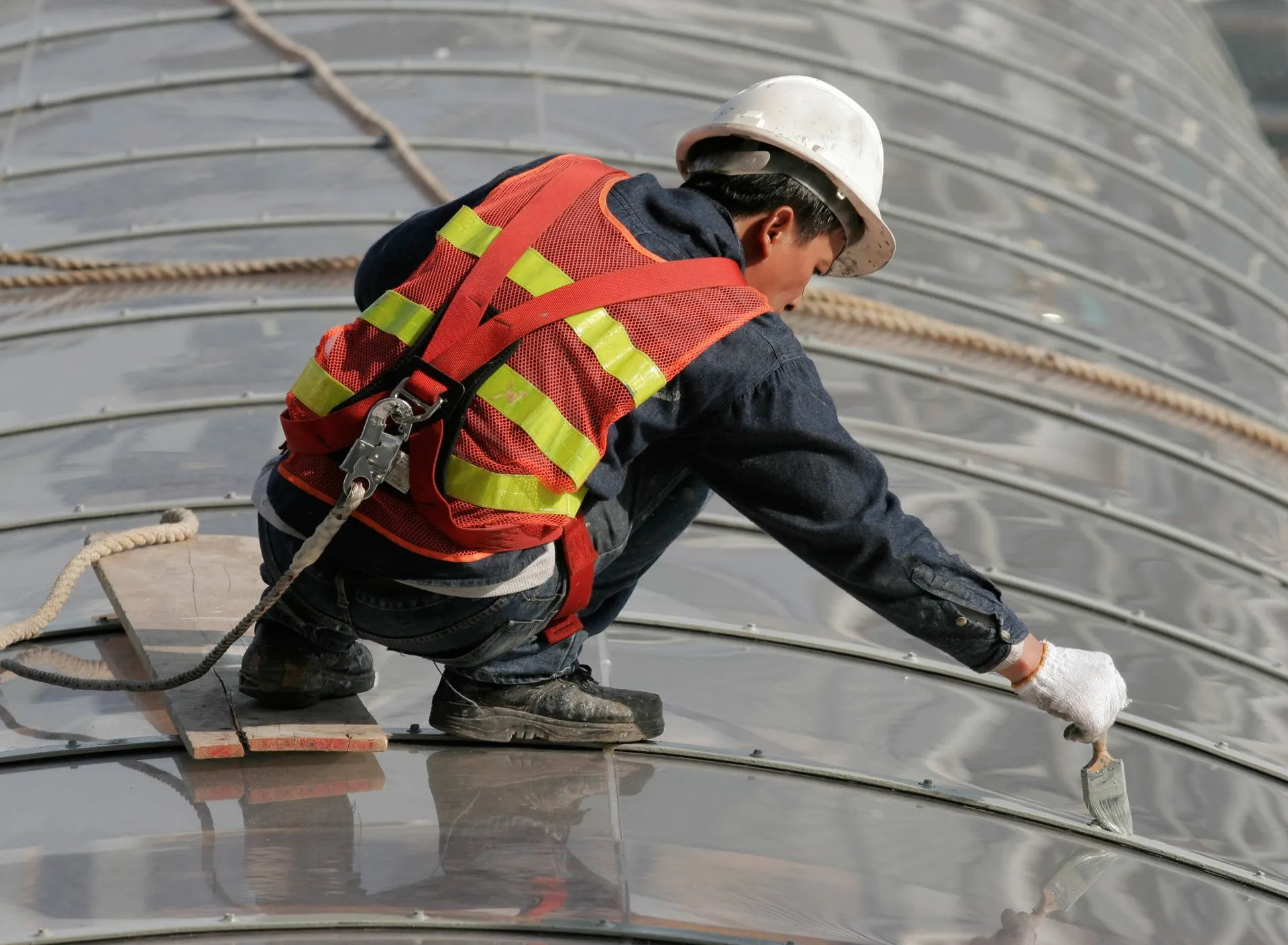
An industrial paint touch up plan for minor damage, mechanical damage, scratches, edge breakdown, or corrosion at welds executed annually or at each opportunity access allows. The goal is to arrest deterioration before it spreads. Touch-up at this stage typically requires hand or power tool preparation rather than blast cleaning, keeping costs minimal.
Tier 2: Intermediate Overcoating
When the topcoat has degraded to the point of chalking, colour fade, and minor corrosion spotting (typically after five to ten years for a well-applied system in a moderate environment), overcoating with a compatible topcoat extends the system life without full system removal. This is the most cost-effective phase of coating lifecycle management preserving the intact primer and intermediate coats that provide the bulk of corrosion protection.
Tier 3: Full Recoat
When coating condition has deteriorated to widespread rusting, adhesion failure, or disbonding, a full blast-and-recoat is required. The asset protection painting schedule should identify this work typically at 15 to 25 year intervals, depending on the original system quality and service environment.
Developing the Protective Coating Inspection Plan
The protective coating inspection plan is the operational backbone of the maintenance schedule. It defines:
- Inspection frequency: annual for high-value or high-risk assets; every two to three years for sheltered or low-risk structures
- Inspection method: visual condition grading against ISO 4628 scales for rusting, cracking, and adhesion loss
- Documentation: photographic records, condition grades per zone, and deterioration trend analysis between inspection cycles
- Trigger criteria: pre-defined condition thresholds that automatically trigger a maintenance work order
Integration with Shutdown Planning
Coating lifecycle management must be integrated with the plant’s turnaround and shutdown planning cycle. Major recoat work blast cleaning and full system application requires plant section isolation, often confined space permits, and scaffolding access that is most practically co-ordinated with plant shutdowns. Building coating work into the industrial coating maintenance schedule several years in advance allows materials to be procured, contractors selected competitively, and access logistics planned without the penalties of urgency.
Start Building Your Plan Today
Ashok Paint Agencies helps plant engineers and maintenance managers build structured paint maintenance plan for plant documents from condition assessment through to long-term repainting schedule industrial assets programmes. Speak to our technical team to begin.