The Applicator Choice That Changes Everything
The choice of paint applicator is not merely a convenience decision it directly affects film quality, coverage uniformity, DFT achievement, material wastage, production rate, and ultimately the performance and longevity of the coating system. Understanding the strengths and limitations of each industrial paint applicator type is essential knowledge for anyone executing or specifying industrial painting work.
Brush Application: Precision Where It Counts
Brush application is the slowest of all paint application method industrial options, but it has indispensable roles in industrial coating work. Its primary use is stripe coating the application of an extra coat of primer to edges, welds, bolts, corners, and rivets that are prone to low DFT and early corrosion initiation. No spray or roller system can reliably coat sharp edges to the same DFT as flat surfaces, making brush stripe coating a mandatory stage in most industrial coating specifications.
Brush application is also used for touching up damage, painting in confined spaces where spray would create unacceptable vapour hazards, and applying penetrating primers to poorly prepared surfaces where intimate contact is essential.
Roller Application: Efficiency for Large Flat Areas
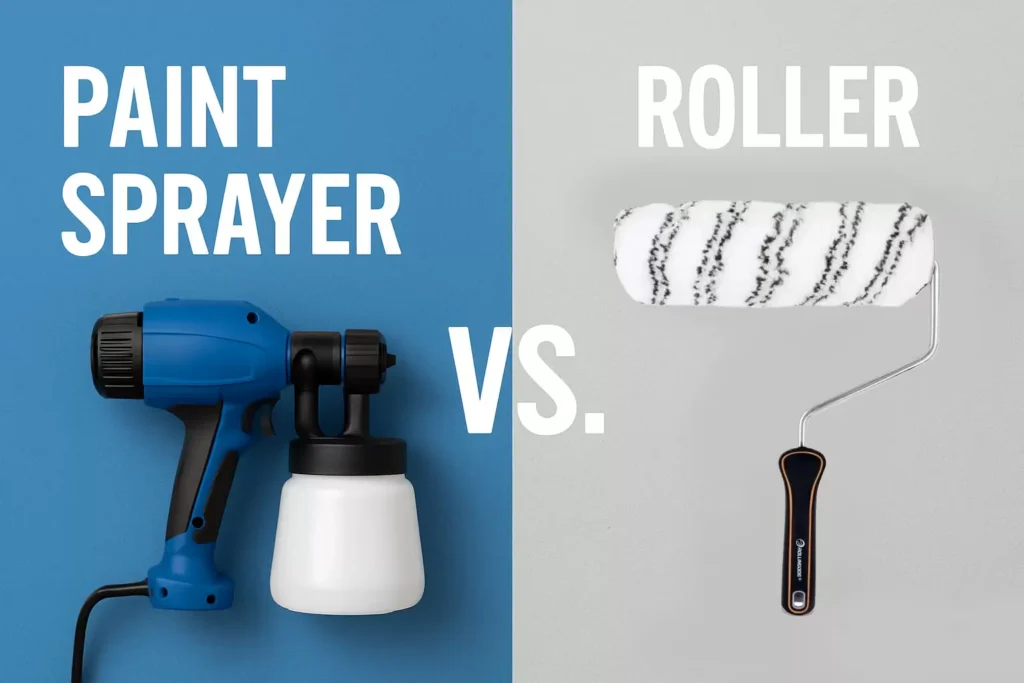
Rollers are significantly faster than brushes and are well-suited to large, relatively flat surfaces such as concrete floors, wall panels, tank exteriors, and structural steel with simple profiles. The airless spray vs roller painting comparison for floor coatings often favours rollers for thin-film systems, as roller application produces a texture that can aid slip resistance and avoids the overspray management challenges of spray application in occupied buildings.
The limitations of rollers are film uniformity on complex geometry and the difficulty of achieving high DFT in a single pass. For high-build epoxy systems specified at 150 to 300 microns per coat, multiple roller passes are required and DFT uniformity is harder to control than with spray.
Airless Spray: The Workhorse of Industrial Coating
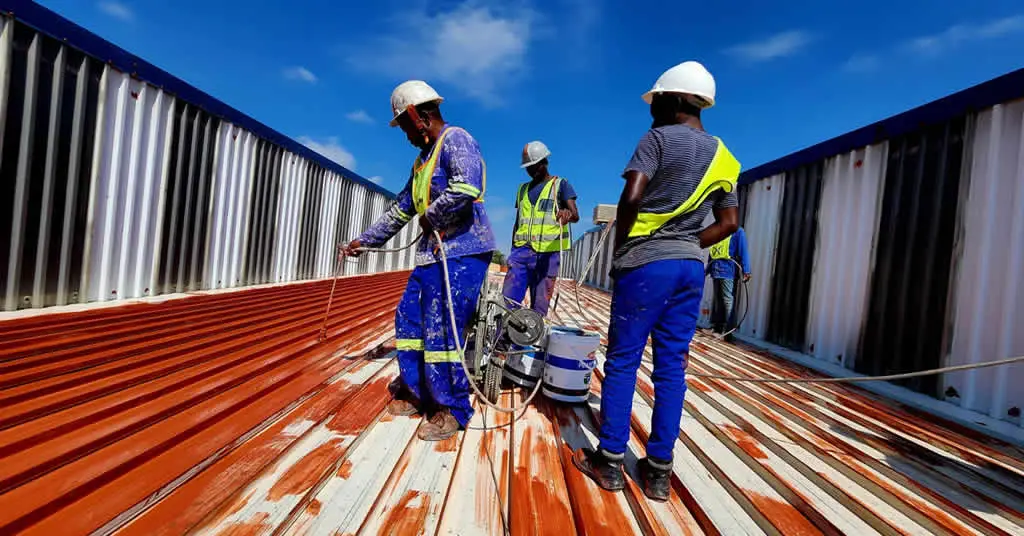
For the vast majority of industrial painting equipment India operations, airless spray is the dominant application method. A high-pressure pump typically 230:1 to 45:1 pressure ratio atomises the paint through a precision tip to produce a fan-shaped spray pattern without the use of compressed air in the spray stream. This makes airless spray coating more efficient, with less overspray and better film build than conventional air spray.
Selecting the best spray gun for industrial paint requires matching the pump output and tip size to the paint’s viscosity. High-build epoxies require larger tips (0.021″ to 0.031″) and higher pump pressures. Thin topcoats require smaller tips (0.013″ to 0.019″) for finer atomisation and a smoother finish.
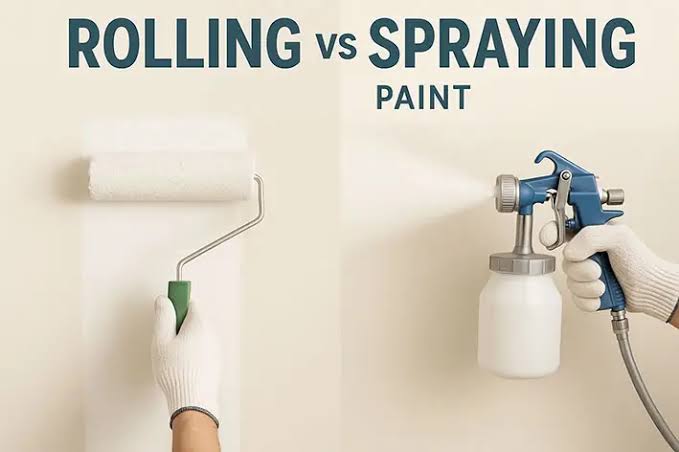
Airless Spray vs Roller Painting: The Practical Comparison
When choosing between airless spray vs roller painting for a specific task, consider:
- Speed: airless spray is three to five times faster than roller application on large open structures, making it the only practical option on major projects
- Film quality: spray produces a more uniform DFT and better penetration into surface profile than roller
- Overspray: spray requires containment and masking in confined spaces or near sensitive equipment roller eliminates this concern
- Material wastage: properly adjusted airless spray wastes less material than roller application, which saturates the pile and loses material to absorption
Brush vs Spray Industrial Coating: When to Use Each
The brush vs spray industrial coating decision should not be presented as either/or. Professional industrial painting operations use all three applicators in combination: spray for bulk application, roller for floors and large panels, and brush for stripe coats, detail work, and inaccessible areas. Knowing how to apply industrial paint correctly means deploying the right tool at the right stage, not defaulting to a single method for the entire project.
Equipment Supply and Technical Advice
Ashok Paint Agencies supplies industrial painting equipment India including brushes, rollers, and airless spray consumables alongside our full range of coating products. Speak to our team for guidance on how to apply industrial paint correctly for your specific coating system.