
What Makes MIO Coatings Different?
Among the range of industrial protective coatings available for structural steel and heavy infrastructure, the epoxy MIO coating occupies a distinctive and well-established position. MIO , micaceous iron oxide , is a naturally occurring mineral pigment with a layered, plate-like (lamellar) crystal structure. When incorporated into an epoxy binder, these overlapping platelets create a coating film that is fundamentally more resistant to moisture and ion diffusion than conventional pigmented epoxy systems.
Understanding why micaceous iron oxide coating performs as it does , and where it fits within a complete protective coating for steel system , is essential knowledge for specifiers and plant engineers working on infrastructure, bridges, storage tanks, and process equipment.
The Science Behind MIO Coating Performance
The platelets in a micaceous iron oxide coating are oriented parallel to the coated surface during application and film formation. This creates a lamellar barrier , a tortuous, multi-layer path that water molecules, chloride ions, and oxygen must navigate to reach the steel substrate. The practical result is a significant reduction in the rate of moisture vapour transmission and ion diffusion through the coating film compared to standard epoxy systems pigmented with conventional fillers.
In addition to its barrier properties, MIO pigment contributes physical hardness and reinforcement to the epoxy film, improving resistance to mechanical damage, UV degradation of the film surface (chalking resistance), and thermal cycling. These properties make the MIO coating particularly valuable as an intermediate coat , the workhorse layer in a multi-coat industrial epoxy coating system.

Where Epoxy MIO Coatings Fit in a Coating System
As an Epoxy Intermediate Coating
The most common role for an epoxy MIO coating is as the intermediate or build coat in a three-coat system. Applied over a zinc-rich or conventional epoxy primer, the MIO intermediate adds 75 to 150 microns of dense, reinforced barrier coating before the topcoat is applied. This sequence , zinc-rich primer, epoxy MIO intermediate, polyurethane or epoxy topcoat , is the standard system specified for structural steel in corrosivity categories C4 and C5 across bridges, refineries, power plants, and petrochemical facilities.
As a Complete Two-Coat System in Moderate Environments
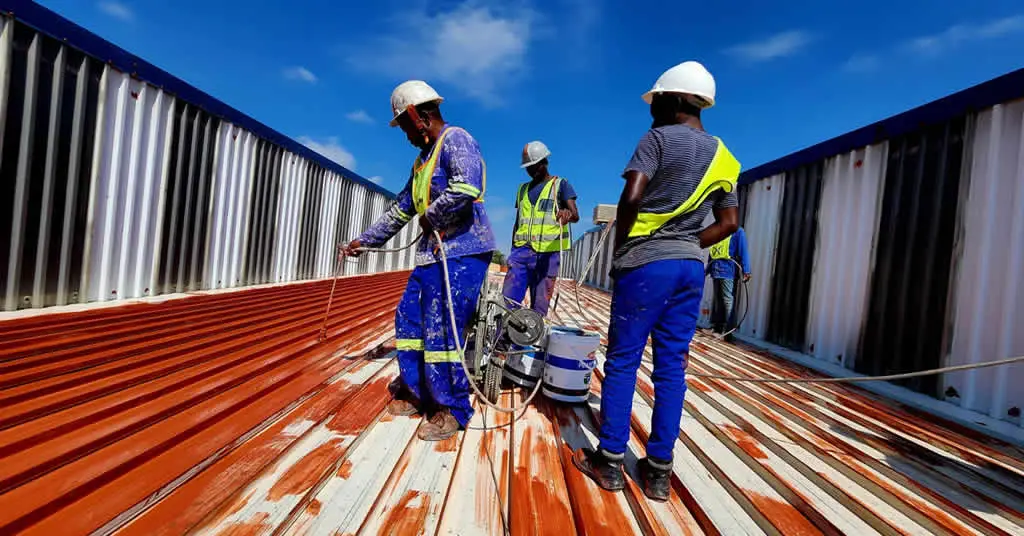
In C3 environments , typical of most inland Indian industrial sites , a direct-to-metal high-build epoxy MIO coating applied over a blast-cleaned primer, followed by a single polyurethane topcoat, is often an economically attractive and technically adequate system. The MIO intermediate in this case functions as both build coat and barrier layer, reducing the total number of coats and application time while still delivering strong protective performance.
As a Single-Coat Maintenance System
For maintenance painting of weathered or marginally rusted steel where full blast cleaning is not feasible, surface-tolerant MIO coatings provide a practical solution. These formulations combine the barrier benefits of micaceous iron oxide pigmentation with penetrating binder systems that adhere to tightly adherent rust and marginally prepared substrates.
Key Industrial Applications
- Bridges and flyovers: the MIO intermediate coat is almost universally specified in Indian bridge coating system specifications for structural steel exposed to high-humidity and high-pollution urban environments.
- Storage tanks: epoxy MIO coatings provide excellent protection for the external surfaces of atmospheric storage tanks in refineries and chemical plants.
- Structural steelwork: industrial buildings, process plant structures, pipe racks, and pressure vessels all benefit from MIO intermediate coats as part of a complete protective coating for steel system.
- Marine structures: offshore platforms, jetties, and marine piling above the waterline are commonly specified with epoxy MIO intermediate coats over zinc-rich primers.
- Power generation: boiler houses, cooling tower structures, turbine halls, and chimney stacks are typical applications for industrial epoxy coating systems incorporating MIO intermediates.
Specifying Epoxy MIO Coatings: What to Include
A complete specification for an epoxy MIO coating as an epoxy intermediate coating should include:
- Generic product type: two-component epoxy, MIO pigmented, to ISO 12944 or equivalent
- Minimum and maximum dry film thickness per coat , typically 75 to 125 microns for intermediate service
- Overcoat window at the anticipated site temperature range
- Compatibility confirmation with the selected primer and topcoat systems
- Holiday testing requirements for immersion or splash zone service
Ashok Paint Agencies: Your Source for High-Performance MIO Systems
Ashok Paint Agencies supplies a complete range of epoxy MIO coating and industrial epoxy coating products from Berger Protecton, Asian Paints PPG, Hempel, and AkzoNobel , brands with established track records in bridge, infrastructure, and industrial plant protective coating for steel applications across India. Contact our technical team at ashokpaintagencies.com for a system recommendation tailored to your project’s corrosivity category and service environment.